
Artificial intelligence
Generative AI, retrieval over organisational knowledge, and machine learning where the data supports it.
Technology
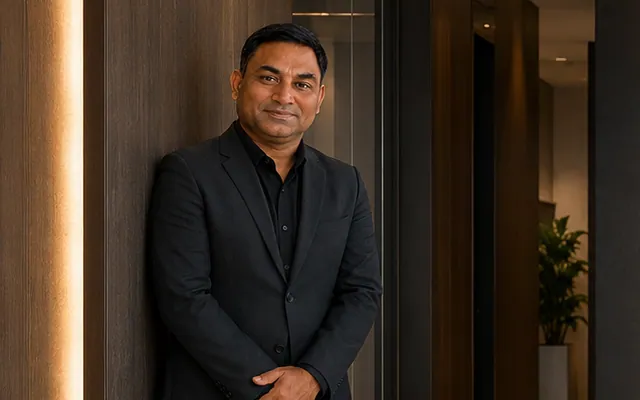
Two decades of databases, telecom systems, business software, companies and AI have left Rohit with a practical view: technology earns its place only when it solves a problem that a business, an organisation or a person genuinely has.
Technology philosophy
Quick answer
Rohit treats technology as the last layer of a solution rather than the first. He begins with the people who do the work and the process as it really runs, then examines the data and systems, and only then decides whether automation or AI will help. The aim is a solution people will use every day, not an impressive demonstration.
Much of this view was formed in telecom back offices, where a fraction of a percent of wrongly rated calls could mean a large billing dispute, and in small businesses, where a counter clerk would abandon any software that slowed down a queue. Both environments punish technology that ignores how people actually work.
It is also why hype words rarely appear in Rohit's proposals. A plain description of what a system will do, what it will not do and what it depends on is more useful to a decision maker than any adjective.
Areas of expertise
A broad range, held together by one habit: understanding the operation before changing it.
Generative AI, retrieval over organisational knowledge, and machine learning where the data supports it.
Multi-step AI systems that plan and use tools, designed with limits, logs and human approval.
Rules, workflows, document handling and AI combined, with people handling the exceptions.
Application design, data models, integration and the unglamorous work of keeping systems maintainable.
Billing, inventory, operations and administration systems that carry an organisation's daily work.
Changing how work gets done, with technology in service of a redesigned process.
What to build, what to buy, what to leave alone, and in which order.
Data quality, sensible cloud choices and security basics that small organisations often skip.
Teaching practical AI and IT skills, guiding projects and mentoring early career engineers.
AI and intelligent systems
Rohit's first model was a neural network trained by backpropagation to predict sunspot activity, during a 2004 internship at IIT Roorkee. The tools have changed beyond recognition since then. The core discipline has not: know what the model has learned, know where it will fail, and design the system around both.
Generative AI has made it possible to read, summarise, classify and draft at a scale that was impractical a few years ago. In organisations that translates into real gains: faster handling of documents and emails, better search across internal knowledge, first drafts that a skilled person can correct in minutes rather than write in hours.
The same systems also produce fluent mistakes. So the practical questions are always about design. Which tasks tolerate an occasional error that someone will catch? Where does the model get its facts? Who reviews the output, and how is that review made easy rather than a formality? What is logged, and who can see it?
Answering those questions well is less dramatic than a demo, and far more valuable.

Agentic AI
AI agents plan steps, call tools and act. Rohit's work on agentic systems, including the implementation of Workologix for one of the leading logistics companies in the United States, uses a simple ladder to decide how much autonomy each task gets.
The agent gathers and summarises information. A person decides everything.
The agent proposes an action with its reasoning. A person chooses.
The agent drafts the action in full. A person approves before anything happens.
The agent acts on low risk, reversible tasks and reports every action for review.
The agent acts alone inside tight, monitored boundaries, with automatic escalation.
The default rule
Agents can prepare, draft and check. Anything that moves money, changes customer records, communicates externally or affects someone's health needs a named person to approve it, at least until the system has earned a higher level with evidence.
Software, enterprise systems and transformation
AI sits on top of software, data and processes. When those are weak, AI makes the weakness faster. Most of Rohit's career has been spent on the foundations.
Rohit's engineering background runs from Oracle schema design and PL/SQL through Unix automation to application architecture for multi-location businesses. The lessons are old and still ignored: model the data carefully, because it outlives every screen; design for the exception, because that is where support calls come from; and keep systems understandable by the next person who has to change them.
Since 2011 his teams have built software for distributors, multi-location clinics, hotels and restaurants, schools and an international franchise network. Each domain looked different on the surface and turned out to share the same underlying problems: identity, inventory, money, schedules and permissions.
Three years implementing operations and business support systems for MTNL at Xalted, Bengaluru, covered process mediation, interconnect billing, fraud management and reconciliation. Those systems handle huge volumes of records, and the discipline they demand (reconciling, validating, tracing every figure back to its source) applies to any organisation that depends on data being right.
For smaller organisations, enterprise technology means something humbler but just as important: a single reliable source for customers, stock and accounts, and reports that people trust enough to act on.
Transformation projects fail less often because of software and more often because the process was never redesigned. Automating a confused process produces faster confusion. Rohit's approach is to draw the current process honestly, including the workarounds, agree on the target process with the people who do the work, and only then choose tools.
The essay on drawing the process first explains the method in more detail.
Including informal steps, spreadsheets and phone calls.
Delays, rework, errors and waiting.
Remove steps before automating any.
Simple tools first, AI where it clearly helps.
Compare against the baseline, not the plan.
The first automation in Rohit's career was a set of Unix shell scripts that removed a few hours of repetitive work each week. The principle carried forward: automate the dull, repeated, well-understood task first, and leave judgement to people.
Intelligent automation extends that principle with AI: reading documents, classifying requests, extracting details and drafting responses. It works best as a partnership in which the system handles the predictable majority and routes the unusual minority to a person with the context already assembled.
Full page: software and digital transformation Full page: business and intelligent automation
Technology consulting
Rohit advises organisations on AI adoption, agentic systems, automation, software architecture and technology strategy, directly and through RCode Intelligence.
Good consulting often saves money by stopping a project, narrowing it, or replacing a custom build with an existing tool. The questions below usually decide more than any technology comparison. Details of previous work and selected references are available on request.
Discuss a technology questionFull page: technology consulting

In time, money, errors or customer frustration, and how you know.
Sometimes the honest answer is that nothing urgent does.
And what they currently do instead.
AI and automation inherit every flaw in the data.
This decides how much human review a system needs.
Entrepreneurship and product thinking
Starting a technology business in a small Indian city teaches product thinking quickly, because every customer is close enough to tell you exactly what is wrong.
Rohit co-founded Acmez Business Solutions with Dr. Aarzoo Saini on 6 April 2011, and the business was incorporated as Acmez Technologies Pvt. Ltd. in 2017. AARHIT Systems followed the same year, then Webyfied Global in 2024 and Sciematics Insights and AIIT Roorkee in 2025. Each was started to meet a specific need rather than simply to add another company.
Product thinking, in this experience, is mostly about restraint: shipping the smallest thing that solves a real problem, watching how it is used, and resisting features that only one loud customer requested.

Co-Founder, Director and Chief Technology Officer
The software and technology company where Rohit's entrepreneurial work began.

Co-Founder, Director and Chief Technology Officer
An AI, intelligent automation and applied research company.

Founder
A digital services company working on websites, applications, commerce and search.

Founder and Chief Technology Officer
An artificial intelligence, data and cybersecurity company based in Roorkee.

Founder
A technology education institute for AI, IT skills, research and projects.

Principal Consultant
Rohit's independent practice for AI and data science consulting.
Emerging technologies
New tools arrive every month. The useful filter is whether a tool changes what a real organisation can do, at a cost and risk it can carry.
Sensible hosting, modern web applications and the discipline to avoid needless complexity.
Clean, owned data first. Dashboards and models only make sense once the numbers can be trusted.
Access control, backups, updates and staff awareness: the basics that prevent most incidents.
Smaller specialised models, AI on local devices and better evaluation methods, watched with interest and tested before trusted.
Teaching and mentoring
Rohit founded AIIT Roorkee in 2025 to teach practical AI and IT skills, guide student research and projects, and help learners prepare for work.
The teaching approach mirrors the consulting approach. Students start from a problem, build something that runs, find out where it breaks and fix it. Theory matters, and it sticks better when it arrives as the explanation for something a student has just seen fail.
Mentoring conversations with early career engineers and founders tend to return to the same themes: learning fundamentals that outlast frameworks, writing clearly, and understanding the business around the code.
Rohit also gives talks and workshops on these subjects; topics and formats are on the Media page.

For students
Programming fundamentals, data structures, databases and networking, followed by one real project taken all the way to deployment. AI tools are most useful to people who already understand what the generated code is doing.
For professionals
As a new layer on existing skills rather than a replacement for them. Retrieval, evaluation, prompt design and agent limits are learnable engineering topics, and system design experience makes them easier to do well.
Insights
Essays on AI, software, transformation and building companies.
A practical framework for agentic AI: which tasks suit AI agents, how to set levels of autonomy, and why people should approve consequential actions.
A practical method for digital transformation: map the real process, find the friction, redesign with the team, then choose automation or AI.

Lessons from implementing telecom OSS/BSS systems for MTNL on mediation, reconciliation and data quality, and why they matter for AI and analytics.
Questions
Rohit works in software engineering and architecture, enterprise applications, business process automation, digital transformation, artificial intelligence including generative AI and agentic AI, technology consulting and technology education. His background includes Oracle database development, Unix scripting and telecom OSS/BSS implementation.
Agentic AI describes AI systems that pursue a goal through several steps: planning, using tools such as search, databases or other software, checking intermediate results and deciding what to do next. Unlike a single question and answer exchange, an AI agent acts. That makes clear limits, logging and human approval for consequential steps essential.
Yes. Rohit advises organisations on AI adoption, agentic systems, intelligent automation, software architecture and technology strategy, mainly through RCode Intelligence and the companies he co-founded. Details of work and selected references are available on request.
He starts with the process rather than the technology: who does the work, where errors and delays happen, what data exists and how costly a wrong answer would be. AI is recommended where the task tolerates occasional mistakes that can be caught, where there is enough reliable data, and where a person can review consequential outputs. Where rules or simple software will do, those are preferred.
Conversations
Share the situation in a few lines: the organisation, the problem and what has been tried. Rohit reads every message personally.