
Seeing clearly
Most failures in projects and in care begin with a problem that was never properly understood. I would rather spend an extra hour listening than a month building the wrong thing.
About
Rohit has built software and technology businesses since 2011 and completed the academic years of his medical degree in 2026. This page explains who he is, how the two fields came to share one life, and what guides the way he works.
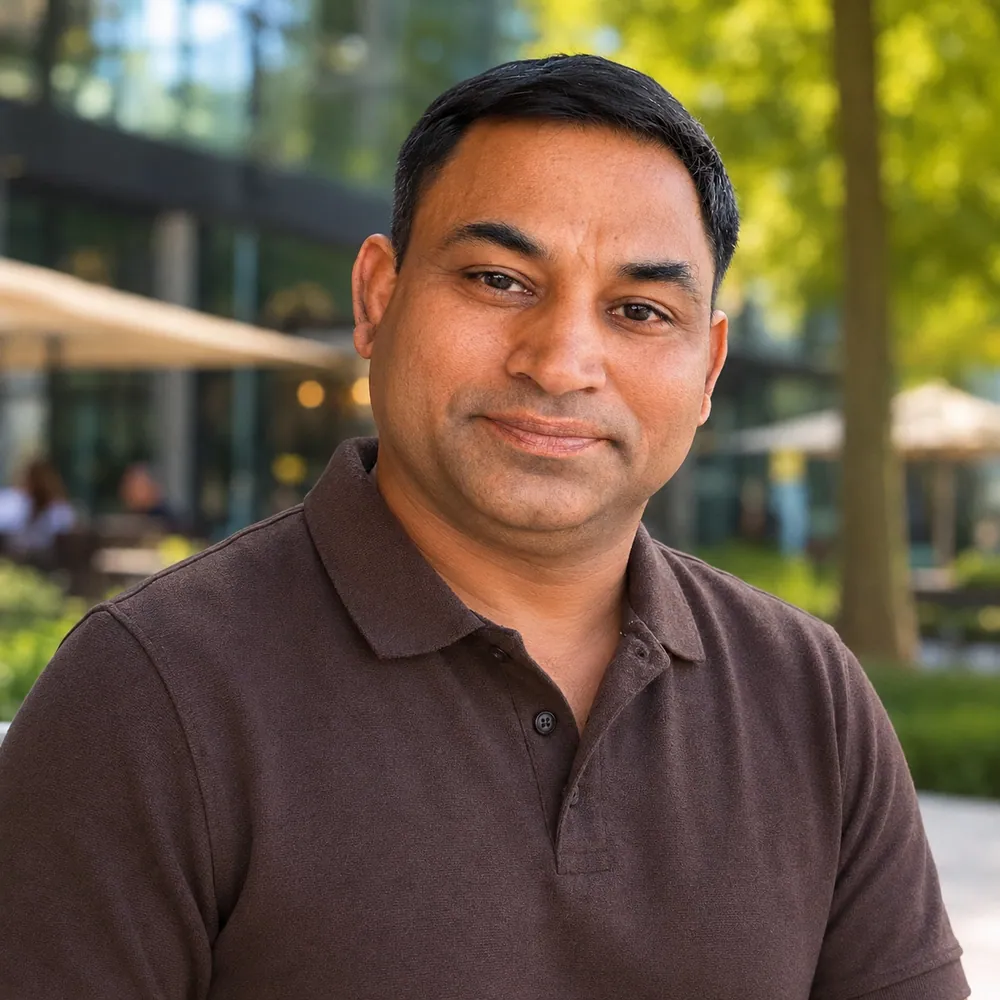
Who I am
In summary
Rohit is an Indian technologist, entrepreneur and homoeopathic clinician in training based in Roorkee, Uttarakhand. He studied Information Technology (B.Tech, 2001 to 2005) and management (MBA, 2008 to 2010), worked on telecom OSS/BSS systems in Bengaluru, and co-founded his first technology business in April 2011. His technology work covers software engineering, enterprise applications, artificial intelligence and agentic AI. In 2021 he began the Bachelor of Homoeopathic Medicine and Surgery (BHMS) programme, completed its academic years in February 2026, and has been in clinical internship since March 2026. RohitRohit.com documents both sides of that work and the ground where technology and healthcare meet.
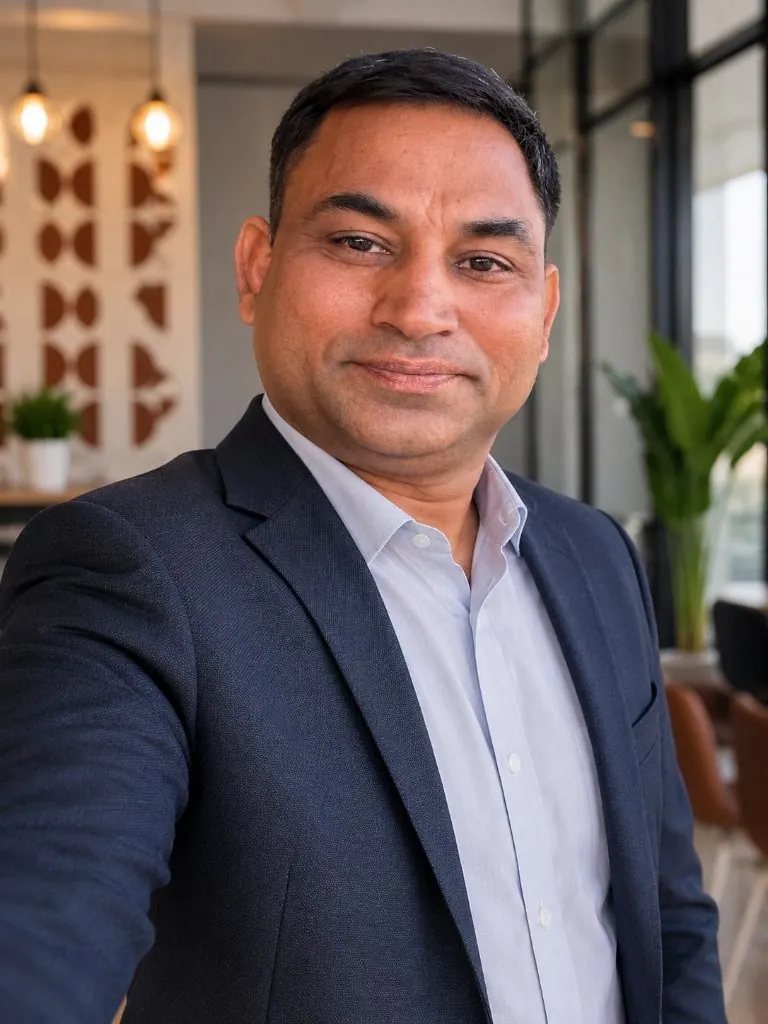
I am an engineer by training and a builder by habit. I studied Information Technology, and my first working years were spent close to the machinery of business systems: Oracle databases, Unix scripts, and then three years in Bengaluru implementing operations and billing systems for a national telecom operator.
In 2011 I started a company in Roorkee with Dr. Aarzoo Saini. We wrote software for distributors, then for clinics, restaurants, hotels and schools, and later for clients outside India. Some of that work grew into separate organisations: an AI and automation company, a digital services company, an AI and cybersecurity company, and an institute where students learn practical AI and IT skills.
In 2019 I took a step back to move forward: I studied Class 12 biology, sat NEET in 2020 and spent the next five years in medical college studying homoeopathic medicine. I finished the academic programme in February 2026 and I am now in clinical internship, working with patients under supervision.
Alongside the BHMS degree I trained in areas that sit close to it: an MA in Yoga and Naturopathic Sciences from Uttarakhand Open University, Reiki in the lineage of Lisa Powers, and an Achology life coaching and counselling certification. They shape how I talk with people about sleep, food, routine and stress, which is often where a case actually turns.
My clinical home is Dr. Suresh Homoeopathic Clinic, established in Roorkee in 1980 by Dr. Suresh Saini. Working with a practice that has seen patients for more than four decades is its own education: you watch how a physician follows a case over years rather than weeks. My homoeopathy work, clinic timings and online consultations are described on my practice website, drrohitrke.com.
People sometimes ask whether I left technology. I did not. I still lead technology at the companies I co-founded and still take on AI work. What changed is that I now look at problems from two positions: the engineer who asks how a system should work, and the clinician who asks what this particular person needs.
What drives me
Across software, business and medicine, the satisfying part has always been the same: moving from confusion to clarity, and from clarity to something that actually works for a person.
Most failures in projects and in care begin with a problem that was never properly understood. I would rather spend an extra hour listening than a month building the wrong thing.
An idea earns respect when it runs in the real world: at a busy billing counter, in a clinic on a Monday morning, or in a class of students who need it to make sense.
Every system has users and every case has a patient. Keeping that person in view is the difference between a solution and a technically correct answer.
The meaning of ROHIT
Rohit is a common Indian name. On this site it also works as a compact description of the work, in three readings that match its three parts.
01 / TECHNOLOGY
The engineering side: software, AI, digital systems and ventures. Technology at its best gives people a practical way through a problem they could not solve before.
02 / HEALTHCARE
The medical side: homoeopathy, individualisation and patient understanding. Health is looked at across the whole person, never only the complaint on the prescription.
03 / CONVERGENCE
Where the two meet: clinical knowledge systems, healthcare workflows and AI that supports professionals while judgement stays human.
RohitRohit is the same name repeated, and the repetition is deliberate. There is one person here, with two sides that are equally real: the technologist and the clinician. A coin makes the same point. It has two faces, it is still one coin, and you cannot spend one side without the other.
The first two readings describe the two fields separately. The third, Rhythm of Health and Information Technology, describes where they meet, which is where much of the most useful work now sits. The acronyms are a way of organising ideas, not a claim about destiny, and they are meant to be read with a light touch.
Three paths
Three threads run through the story. They overlap in time, and each has influenced the others.
A B.Tech in Information Technology (2001 to 2005) and a 2004 internship at IIT Roorkee, where a neural network trained by backpropagation tried to predict sunspot activity. Then Oracle development, Unix shell scripting and implementation work on MTNL's OSS/BSS systems at Xalted in Bengaluru, covering mediation, interconnect billing, fraud management and reconciliation.
Today the technology work centres on AI, agentic systems and intelligent automation, alongside software architecture and technology strategy.
TechnologyAn MBA in Marketing and Human Resources (2008 to 2010), then the start of Acmez Business Solutions on 6 April 2011 with Dr. Aarzoo Saini. Software for distributors (2011), multi-location clinics (2012), hotels and restaurants (2014) and schools (2018), and a franchise management system for a retail chain in the United States and Canada.
Incorporation in 2017, AARHIT Systems the same year, then Webyfied Global, Sciematics Insights and AIIT Roorkee.
VenturesClass 12 with Biology through NIOS (2019 to 2020), NEET in 2020, and the BHMS programme at Sri Ganganagar Homoeopathic Medical College Hospital and Research Institute, affiliated to Tantia University (April 2021 to February 2026).
A supervised clinical internship since March 2026, with practice at Dr. Suresh Homoeopathic Clinic in Roorkee planned from April 2027.
HealthcareAn engineer taught me how to build solutions. A doctor taught me how to heal lives. Being both means I can understand systems with logic and serve people with compassion.
Why these worlds belong together
The line is short, and it describes a real division of motives. Engineering is the part of the work that is pure enjoyment: taking a messy process apart and putting it back together so that it runs. Medicine is the part that asks for patience and care, because the person in front of you is not a process and should never be treated like one.
The two correct each other. Engineering brings structure to clinical thinking: clear records, careful reasoning, a habit of checking assumptions. Clinical training brings humility to engineering: the recognition that a system which works for the average user may fail the person who needed it most.
This is also why the convergence of technology and healthcare is more than a professional niche here. It is the natural meeting point of two ways of thinking that already live in the same head.
Where technology meets human careHow I think
Not rules for everyone. These are the habits that have held up across software projects, businesses and clinical training.
Whether it is a warehouse or a patient, describe what is happening before deciding what to do about it. The first proposed fix is usually a guess.
Averages hide the cases that matter. Billing systems fail on the unusual record, and treatment fails on the symptom nobody asked about.
A modest tool used every day beats an impressive one that staff quietly work around. Adoption is part of the design, not an afterthought.
Automation and AI can prepare, suggest and check. Decisions that affect someone's money, health or livelihood need a person who owns them.
In a proposal or a consultation, honest uncertainty builds more trust than confident overstatement, and it leads to better follow up.
Every field changes. Being willing to start again, even at the level of a school subject, is a professional skill and not an embarrassment.
What I value
Clear statements of what a technology or a treatment can and cannot do. No inflated promises to clients, students or patients.
Meetings with a purpose, software that saves effort, and consultations where the person feels heard rather than processed.
Owning outcomes, including the uncomfortable ones. Responsible use of data, AI and clinical authority is not optional.
Businesses, skills and health all improve over time rather than overnight. Consistent small steps outlast dramatic gestures.
Building from Roorkee, in a small city, with local teams and students, while working with people across India and beyond.
Good work is rarely solo. Co-founders, colleagues, teachers, clinicians and students have shaped every stage.
Writing
Writing is how Rohit thinks a subject through. One book is published and two are being written, one for each side of the work.
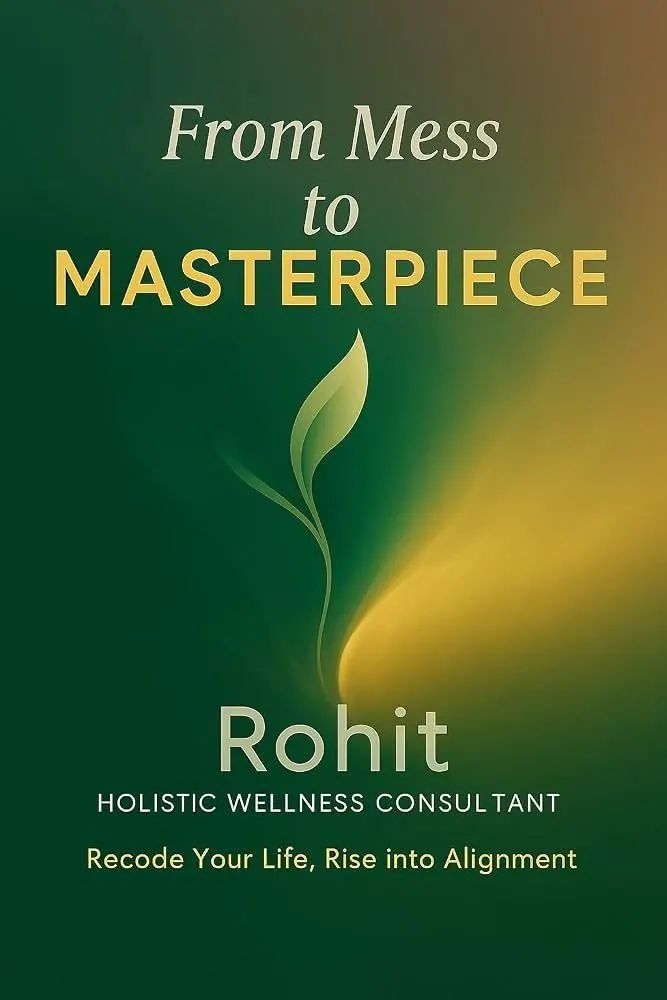
Published
Rohit's published book, available on Amazon.
In writing
A book in progress on the technology side of Rohit's work.
In writing
A long-form book for homoeopathic physicians and students on understanding the whole patient rather than the disease label.
Shorter pieces on the same subjects appear in Insights, and the current writing status is on the Now page.
In more detail
Each of these has a page of its own.
Elsewhere online
This site covers the whole picture. Each side of the work also has a site of its own.
Further training
Study that supports the clinical side of the work, listed on Rohit's practice website.
Uttarakhand Open University. Study of yoga, pranayama, diet and lifestyle alongside homoeopathic medicine.
Trained in the lineage of Lisa Powers.
Achology certification, used for conversations about stress, habits and lifestyle change.
What I continue to learn
A B.Tech, an MBA, a return to school biology and five years of medical education are not a straight line. They are the record of a habit.
Right now the learning runs on two tracks at once. On the clinical side it is case taking, examination and follow up, the parts of medicine that textbooks describe and only patients teach. On the technology side it is the steady stream of new AI models, agent frameworks and evaluation methods, filtered through one question: will this hold up in production for a real organisation?
There is a third track that connects them: how knowledge is organised. Materia medica, repertories, clinical guidelines, software documentation and AI retrieval systems are all attempts to make large bodies of knowledge usable at the moment of decision. Studying one improves understanding of the others.
Much of this learning is written up in Insights, the current list lives on the Now page, and talks, interviews and workshops are listed on the Media page. Terms from both fields are defined in the glossary.






The record
A reference view of verified facts. Dates are shown only where they are confirmed.
| Period | Programme and institution |
|---|---|
| 1998 to 2001 | Class 10 (1998 to 1999) and Class 12 in Physics, Chemistry and Mathematics (2000 to 2001), CBSE Jawahar Navodaya Vidyalaya, Haridwar |
| 2001 to 2005 | B.Tech in Information Technology Uttar Pradesh Technical University, Lucknow |
| 2004 | Internship: predicting annual sunspot activity with an artificial neural network trained by backpropagation IIT Roorkee |
| 2008 to 2010 | MBA in Marketing and Human Resources Punjab Technical University |
| 2019 to 2020 | Class 12 with Biology National Institute of Open Schooling (NIOS) |
| 2020 | Qualified the National Eligibility cum Entrance Test NEET |
| April 2021 to February 2026 | Bachelor of Homoeopathic Medicine and Surgery (BHMS), academic programme Sri Ganganagar Homoeopathic Medical College Hospital and Research Institute (affiliated to Tantia University) |
| March 2026 onwards | Compulsory rotating clinical internship under provisional registration no. 07812, expected to finish in March 2027 Clinical internship |
| Organisation | Role |
|---|---|
| Acmez Technologies Pvt. Ltd. | Co-Founder, Director and Chief Technology Officer Founded 6 April 2011 |
| AARHIT Systems | Co-Founder, Director and Chief Technology Officer Founded 5 October 2017 |
| Webyfied Global | Founder Founded 27 January 2024 |
| Sciematics Insights | Founder and Chief Technology Officer Founded 16 May 2025 |
| AIIT Roorkee | Founder Founded 2025 |
| RCode Intelligence | Principal Consultant |
| Dr. Suresh Homoeopathic Clinic | Clinical practice planned from April 2027 |
From Rohit's desk
A personal reflection on keeping two disciplines in one life, and why every message reaches me directly.
Most people arrive here for one half of this website. Engineers and business owners come for the technology. Patients, students and colleagues come for the medicine. I have kept both halves in one place because in my own life they were never separate, and because the questions worth asking in each turn out to be the same questions: what is really going on here, who is affected by it, and what would genuinely help.
I write and build slowly, I say what I do not know, and I would rather explain an idea plainly than impress anyone with it. If something on this site is useful to you, or wrong, or worth arguing about, I would like to hear it. Every message reaches me directly.
Questions
Rohit lives and works in Roorkee, in the Haridwar district of Uttarakhand, India. His technology companies and the education institute he founded are based there, and he plans to begin clinical practice in Roorkee in April 2027.
Rohit holds a B.Tech in Information Technology from Uttar Pradesh Technical University (2001 to 2005) and an MBA in Marketing and Human Resources from Punjab Technical University (2008 to 2010). He later completed Class 12 with Biology through NIOS, qualified NEET in 2020 and completed the BHMS academic programme at Sri Ganganagar Homoeopathic Medical College Hospital and Research Institute (April 2021 to February 2026). He is now in clinical internship.
Rohit has completed the academic years of the Bachelor of Homoeopathic Medicine and Surgery (BHMS) and has been in the compulsory clinical internship since March 2026, practising under supervision with provisional registration. The internship is expected to finish in March 2027. He does not offer consultations through this website.
Rohit co-founded Acmez (started as Acmez Business Solutions on 6 April 2011 and incorporated as Acmez Technologies Pvt. Ltd. on 13 July 2017) and AARHIT Systems (5 October 2017). He founded Webyfied Global (27 January 2024), Sciematics Insights (16 May 2025) and AIIT Roorkee (2025). He also consults through RCode Intelligence.
For Rohit the two were never far apart. Building clinic software in 2012 showed him how much of healthcare depends on judgement that no system captures, and a long habit of learning made going back to study feel less like a change of career than a widening of the same work: understanding complex situations and helping people through them.
Conversations
Whether you are a founder, a clinician, a student or a researcher, a short message with some context is the best way to begin.